%20.png)
Forever Home Buying Guide Essential Steps for Smart Long Term Decisions
- Jul 22
- 8 min read
Buying a home can feel exciting one minute and completely overwhelming the next. One listing looks perfect online, then the kitchen feels tiny in person. Another house has the right layout, but the commute makes your stomach drop. Then there’s the money side, which can make even confident buyers second-guess everything.
That’s normal.
A forever home is bigger than a purchase. It’s a place that should support your life now and still make sense years from now. It doesn’t have to be perfect, but it should fit your real needs, your budget, and your long-term plans.
This guide walks through the essential steps for Buying Your Forever Home with more clarity and less guesswork. Think of it as a practical way to slow down, ask better questions, and make a decision you’ll feel good about later.

Start by defining what forever really means to you
Before looking at houses, spend time defining what “forever” means in your actual life. For some people, it means a home where they can raise kids. For others, it means a quiet place near nature, room for aging parents, or a low-maintenance house close to restaurants and public spaces.
The clearer you are, the easier it becomes to tell the difference between a smart fit and a shiny distraction.
Start with three lists.
Must-haves
These are the things you truly need. For example:
Enough bedrooms for your household
A safe, practical commute
A layout that works for daily routines
A yard for pets or kids
A main-floor bedroom if stairs may become difficult later
Nice-to-haves
These would be great, but they shouldn’t drive the whole decision.
A finished basement
A big kitchen island
A fireplace
Newer appliances
A walk-in closet
Deal breakers
These are the things you already know you’ll regret.
Too far from work or family
No outdoor space
Heavy street noise
Not enough storage
Major repairs you can’t afford
This exercise keeps emotions in check. A beautiful house can still be wrong for your life. A less flashy home may quietly check every box that matters.
Picture your life five, ten, and fifteen years from now
A forever home should have room for your future, not just your current furniture.
Picture a normal Tuesday a few years from now. Where do you drink coffee? Where do kids, guests, pets, or hobbies fit? How long does it take to get groceries? Can someone work from home without taking over the dining table? Is there space to rest, gather, and have privacy?
Ask yourself simple long-term questions:
Will this home still work if your family grows?
Could you handle the stairs if life changes?
Is there room for visiting relatives or long-term guests?
Would the yard feel fun or like a chore?
Could the neighborhood still fit your lifestyle in ten years?
Are there spaces that can change over time?
Flexible homes often make better long-term choices. A spare bedroom can become a nursery, guest room, hobby space, or home workout area. A basement can become storage now and living space later. An open dining area can host dinner with friends today and school projects down the road.
Try not to buy only for a fantasy version of life. Buy for the way you actually live, with enough room to grow.

Build a budget that protects your everyday life
The real cost of owning a home is more than the monthly loan payment. A smart budget includes the full picture, so the home doesn’t leave you stretched too thin.
Common costs include:
Monthly loan payment
Property taxes
Home insurance
Utilities
Homeowner association fees, if the community has them
Repairs and maintenance
Lawn care, snow removal, or pest service
Furniture, tools, and moving costs
A helpful rule is to budget for life after closing day. The first year often brings surprise purchases, like window coverings, a lawn mower, paint, shelves, or a repair you didn’t expect.
Before shopping seriously, decide on two numbers.
Your comfortable monthly payment
This is the amount that still lets you save, enjoy life, handle groceries, pay bills, and manage emergencies.
Your absolute maximum price
This is the upper limit you won’t cross, even if a house has the dream kitchen.
Those numbers may be different from what a lender says you can borrow. A lender looks at your financial profile. You know your lifestyle, family plans, comfort level, and other goals.
This article is for general information only and isn’t financial advice. For personal guidance, talk with a trusted lender or financial advisor.
Understand your mortgage options before you fall in love with a listing
A mortgage is simply the home loan you use to buy the property. There are several common types, and the right one depends on your down payment, credit history, income, and eligibility.
Here’s a plain-language look at common options.
Loan type | Best fit | What to know |
Conventional loan | Buyers with steady income and stronger credit | Often needs a higher credit score, but can be a strong option for many buyers |
Federal Housing Administration loan | Buyers with a smaller down payment or less established credit | Can be easier to qualify for, but includes added costs |
Veterans Affairs loan | Eligible service members, veterans, and some surviving spouses | May allow a low or no down payment if you qualify |
United States Department of Agriculture loan | Eligible buyers in certain rural or suburban areas | May offer low down payment options in approved locations |
You don’t need to become a mortgage expert. You do need to ask clear questions.
Ask lenders:
What loan types do I qualify for?
What would my monthly payment look like at different prices?
How much cash do I need before closing?
Are there added fees I should expect?
What happens if interest rates change before I buy?
Can you explain this in simple terms?
It’s smart to compare more than one lender. Rates, fees, and service can vary. A small difference in the loan terms can matter over time.
Also, get preapproved before house hunting. That means a lender reviews your finances and gives you a realistic price range. It helps you shop with confidence and shows sellers you’re serious.
Choose a location you’ll still like after the newness wears off
You can change paint colors. You can replace flooring. You can remodel a bathroom. You can’t move the house to a better location.
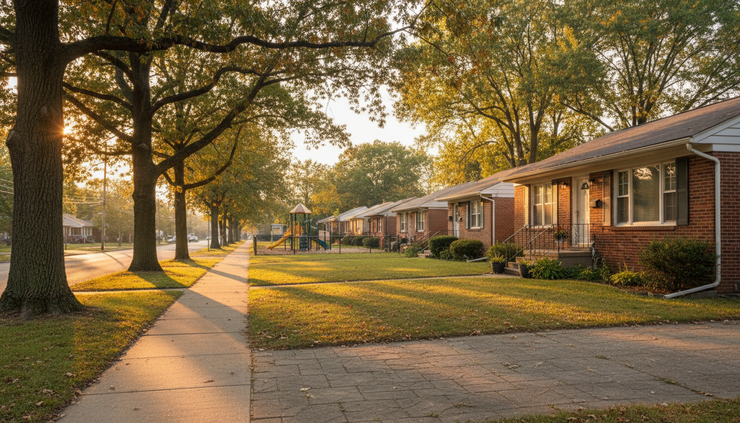
Location affects daily life more than most first-time buyers expect. A home may look perfect during a Saturday afternoon showing, but the real test is how the area feels at 7:30 a.m., after dark, and during your normal routine.
Spend time in the neighborhood before making an offer. Drive the commute. Visit nearby grocery stores. Walk the block. Listen for noise. Check how easy it is to reach parks, schools, doctors, family, friends, and places you go often.
Look for things that support your lifestyle:
Reasonable commute times
Grocery stores, pharmacies, and medical care nearby
Parks, trails, playgrounds, or fitness options
Restaurants and coffee shops if you enjoy going out
Schools and child care options if they matter to you
Public transportation or easy highway access
Sidewalks, lighting, and places to walk safely
Community amenities can also add comfort. A pool, clubhouse, walking path, or playground may be useful, especially if you’ll actually use them. Just remember that shared amenities often come with monthly fees and rules.
Don’t choose a neighborhood only because it’s trendy. Choose one that fits your rhythm.
Think about resale value even if you never plan to sell
It may sound strange to think about selling when you’re buying a forever home, but life changes. Jobs move. Families grow. Health needs shift. Priorities change.
A home with solid resale value gives you more options later.
Look for features many buyers tend to want:
A practical floor plan
Enough bedrooms and bathrooms for the area
Good natural light
A functional kitchen
Off-street parking
Storage space
A well-kept exterior
A location near useful services
Reasonable noise levels
Be careful with homes that are too unusual. A quirky layout, very steep driveway, tiny lot, or expensive upkeep may work for you, but it could reduce the number of future buyers.
Also pay attention to the condition of major parts of the home. The roof, heating and cooling system, plumbing, electrical system, windows, and foundation can be expensive to repair. You don’t need to know all the details yourself. That’s where a home inspection helps.
A good inspector looks for problems you may miss during a quick showing. If the inspection finds issues, you can ask the seller to make repairs, adjust the price, or give you time to decide whether the home still makes sense.
Follow the home-buying process one step at a time
The process feels less stressful when you know the order of events. Each market is a little different, but most buyers follow a path like this.
Get your finances ready
Review your savings, income, monthly bills, and credit history. Try to avoid opening new credit cards or taking on large new debts while preparing to buy.
Get preapproved
A lender reviews your information and gives you a price range. This helps you avoid falling in love with homes outside your comfort zone.
Choose a real estate agent
A good agent explains the process, sends listings, schedules showings, helps you compare homes, and guides your offer. Look for someone who listens well and doesn’t pressure you.
Tour homes with a clear checklist
Bring your must-haves, nice-to-haves, and deal breakers. Take notes after each showing. Homes can blur together fast.
Make an offer
Your agent helps you decide on price and terms. The offer may include the price, timing, inspection plans, and other details.
Complete the inspection and loan steps
After the seller accepts your offer, the lender continues reviewing the loan. The inspection helps you understand the home’s condition.
Review final paperwork and close
Before closing, you’ll review costs and sign documents. Once everything is complete, you get the keys.
The process has a lot of moving parts, but you don’t have to know everything on day one. Just focus on the next right step.
Make decisions with both your heart and your checklist
A forever home is emotional. It should be. You’re choosing where birthdays may happen, where dinner gets made, where pets nap in sunny spots, and where ordinary days turn into years of memories.
Still, emotions need a partner. That partner is your checklist.
After each showing, ask:
Does this home meet our must-haves?
What would we need to fix or change right away?
Can we afford it without feeling squeezed?
Does the location fit our normal week?
Would this home still work if life changes?
Are we excited because it fits, or because it looks pretty?
If you’re buying with a partner, talk honestly before making an offer. One person may care most about commute time. The other may care about kitchen space or being near family. Neither is wrong. The goal is to find the best shared fit.
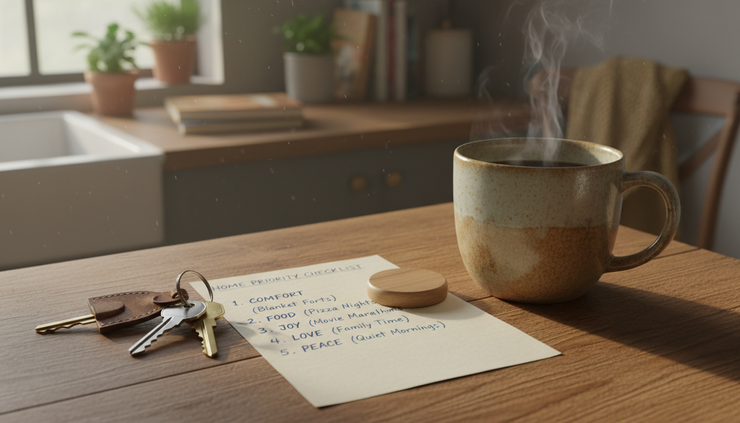
Try this simple exercise. Each person ranks the top five priorities for the home. Compare lists. Anything that appears on both lists should carry extra weight.
Give yourself permission to be patient
The right home may not appear in the first weekend. You might lose an offer. You might tour a house that looked perfect online and felt wrong in person. That doesn’t mean you’re failing. It means you’re learning.
Patience can protect you from expensive regrets.
When a home feels like a strong option, slow down enough to check the basics. Visit the area again. Look at your budget again. Talk through repairs. Ask questions. Sleep on it if you can.
A smart long-term decision usually feels exciting and grounded. You can imagine your future there, and the numbers still make sense.
Your forever home doesn’t need every dream feature on day one. It needs the right foundation for your life. Start with clear priorities, protect your budget, understand your loan choices, study the location, and keep future resale in mind. If you do that, you’ll be ready to choose a home with confidence, not just hope.


